Classical
Russia
Igor Stravinsky
170,461
Top Songs on Shazam
This Week
All Time


Most Streamed Songs by Igor Stravinsky


Artist Playlists
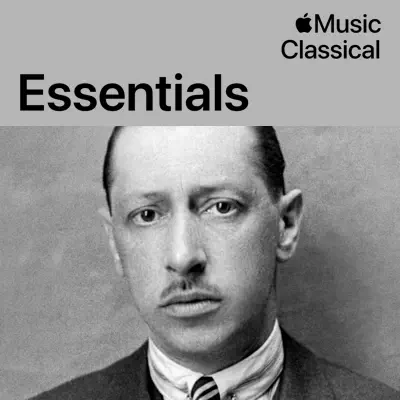


About Igor Stravinsky

One of the most remarkable minds ever applied to music, Stravinsky was a master of masks. Indeed, his ballets Petrushka (1911) and Pulcinella (1920), and the opera-oratorio Oedipus Rex (1927), all have puppets or masked characters as protagonists. A professed anti-Romantic, he insisted that music could express nothing, yet powerful feelings often stir in the background and occasionally erupt: in elemental fury in the revolutionary The Rite of Spring (1913) or in startlingly intense longing toward the end of the ballet The Fairy’s Kiss (1928).
Born near St. Petersburg in 1882, Stravinsky studied privately with Rimsky-Korsakov, a leading light in the Russian nationalist style. Stravinsky’s earliest works, notably the ballet The Firebird (1910) written for Paris, show his teacher’s influence with their lustrous orchestral colors and use of complex pulses from Russian folk music. Stravinsky took irregular rhythms and percussive dissonance to a new extreme in The Rite of Spring, with results that shocked even several of his fellow composers, including Debussy.
Russian folk and liturgical music remained influential for some years, even after Stravinsky was forced to remain outside Russia with the outbreak of World War I. His ballet-cantata Les Noces (The Wedding), largely composed in Switzerland, captures the raw exhilaration of a Russian peasant wedding and ends with exultant bell ringing. Stravinsky took some time to complete this work, and in the meantime, with his return to the artistic scene in Paris, he entered a new compositional period. Pulcinella and Symphonies of Wind Instruments (1920) began what critics identified as his neoclassical phase; although supposedly an abstract and objective aesthetic, Stravinsky proved it could also encompass playfulness in his Octet (1923) and beguilingly sensual string writing in Apollon musagète (1928).
With his return to the Russian Orthodox Church in 1926, Stravinsky began to express his faith in his music, most strikingly in his choral-orchestral Symphony of Psalms (1930), another neoclassical work with its homage to Bach’s fugal style. The imminent Nazi invasion of France drove Stravinsky to the US, where for a while he continued his neoclassical style in such works as the Symphony in C (1938-40) and his strangely moving operatic masterpiece The Rake’s Progress (1951). Stravinsky then found fresh inspiration by belatedly embracing the 12-tone serial method of Schoenberg and his followers, resulting in such works as the Canticum sacrum (1955) and his final masterpiece, Requiem Canticles (1966).
His music continues to be an inspiring influence for composers, not only in classical music, but also in jazz, rock, and pop.
Similar to: Igor Stravinsky
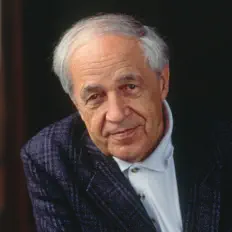
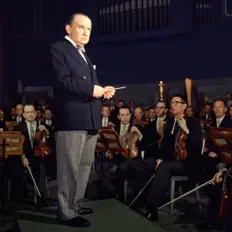
Discover more music and artists similar to Igor Stravinsky, like Pierre Boulez, Columbia Symphony Orchestra, The Cleveland Orchestra