

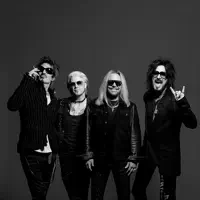
Mötley Crüe
Dr. Feelgood
Album · Rock · 1989 · BMG Rights Management (US) LLC
A couple of days before Christmas 1987, Nikki Sixx, the bass player and principal songwriter of Mötley Crüe, took a shot of heroin in the Franklin Plaza Apartments in Hollywood, and, for a couple of minutes, died. Sixx’s song about the experience, “Kickstart My Heart,” wasn’t exactly the kind of self-reflection you’d expect from someone who had just touched the void, but then again, you didn’t exactly come to Mötley Crüe for self-reflection.
Released near the end of 1989, Dr. Feelgood wasn’t just a peak for the band, but one of the last triumphs of glam metal before the cultural tide shifted toward grunge and alternative rock. They had gotten—and were trying to stay—sober, moving from LA to Vancouver to work with producer Bob Rock, who ventured the high-wire act of polishing their performances while protecting the trashy spontaneity that made them vital in the first place. (“The whole process was the antithesis of every punk principle I had held fast to as a teenager,” Sixx wrote in the band’s 2001 autobiography, The Dirt. “I still loved loud, raw, sloppy, mistake-filled rock and roll…. But at the same time, I wanted an album I was finally proud of.”)
The fruits were lively (“Kickstart My Heart,” “Dr. Feelgood”), rude (“Same Ol’ Situation [S.O.S.],” “She Goes Down”), hammy (“Without You,” “Time for a Change”), and funny, albeit in a boys-will-be-boys way that feels increasingly trapped in amber as the years roll on (the country kiss-off “Don’t Go Away Mad [Just Go Away]”). They were even, as in the case of “Sticky Sweet,” a little funky—a shift in rhythmic attitude Bob Rock later attributed to Tommy Lee getting into rap. Most of all, they were coherent—proof that you don’t have to be a reckless mess to sound messy or reckless, and, if anything, that some Perrier and a jog around the lake—Sixx’s self-deprecatingly professed regimen—does one better in the long run than heroin chased with more heroin.
The album sold its storied millions, making the band more famous and salient than they’d ever been before dropping them into a nearly 15-year period of dysfunction. In the meantime, winds blew, plates shifted, Metallica drummer Lars Ulrich heard Dr. Feelgood and helped hire Bob Rock for 1991’s Metallica, a bleak, seriously serious album that did as much to offset public taste for glam metal as Nevermind. Listening back now, Feelgood does sound a little dated, a ready-made time capsule for a moment always disappearing in the rearview. Then again, Now always seemed to be what Mötley Crüe lived for, even if they had to die now and then.

Dr. Feelgood
Mötley Crüe
A couple of days before Christmas 1987, Nikki Sixx, the bass player and principal songwriter of Mötley Crüe, took a shot of heroin in the Franklin Plaza Apartments in Hollywood, and, for a couple of minutes, died. Sixx’s song about the experience, “Kickstart My Heart,” wasn’t exactly the kind of self-reflection you’d expect from someone who had just touched the void, but then again, you didn’t exactly come to Mötley Crüe for self-reflection.
Released near the end of 1989, Dr. Feelgood wasn’t just a peak for the band, but one of the last triumphs of glam metal before the cultural tide shifted toward grunge and alternative rock. They had gotten—and were trying to stay—sober, moving from LA to Vancouver to work with producer Bob Rock, who ventured the high-wire act of polishing their performances while protecting the trashy spontaneity that made them vital in the first place. (“The whole process was the antithesis of every punk principle I had held fast to as a teenager,” Sixx wrote in the band’s 2001 autobiography, The Dirt. “I still loved loud, raw, sloppy, mistake-filled rock and roll…. But at the same time, I wanted an album I was finally proud of.”)
The fruits were lively (“Kickstart My Heart,” “Dr. Feelgood”), rude (“Same Ol’ Situation [S.O.S.],” “She Goes Down”), hammy (“Without You,” “Time for a Change”), and funny, albeit in a boys-will-be-boys way that feels increasingly trapped in amber as the years roll on (the country kiss-off “Don’t Go Away Mad [Just Go Away]”). They were even, as in the case of “Sticky Sweet,” a little funky—a shift in rhythmic attitude Bob Rock later attributed to Tommy Lee getting into rap. Most of all, they were coherent—proof that you don’t have to be a reckless mess to sound messy or reckless, and, if anything, that some Perrier and a jog around the lake—Sixx’s self-deprecatingly professed regimen—does one better in the long run than heroin chased with more heroin.
The album sold its storied millions, making the band more famous and salient than they’d ever been before dropping them into a nearly 15-year period of dysfunction. In the meantime, winds blew, plates shifted, Metallica drummer Lars Ulrich heard Dr. Feelgood and helped hire Bob Rock for 1991’s Metallica, a bleak, seriously serious album that did as much to offset public taste for glam metal as Nevermind. Listening back now, Feelgood does sound a little dated, a ready-made time capsule for a moment always disappearing in the rearview. Then again, Now always seemed to be what Mötley Crüe lived for, even if they had to die now and then.
Released near the end of 1989, Dr. Feelgood wasn’t just a peak for the band, but one of the last triumphs of glam metal before the cultural tide shifted toward grunge and alternative rock. They had gotten—and were trying to stay—sober, moving from LA to Vancouver to work with producer Bob Rock, who ventured the high-wire act of polishing their performances while protecting the trashy spontaneity that made them vital in the first place. (“The whole process was the antithesis of every punk principle I had held fast to as a teenager,” Sixx wrote in the band’s 2001 autobiography, The Dirt. “I still loved loud, raw, sloppy, mistake-filled rock and roll…. But at the same time, I wanted an album I was finally proud of.”)
The fruits were lively (“Kickstart My Heart,” “Dr. Feelgood”), rude (“Same Ol’ Situation [S.O.S.],” “She Goes Down”), hammy (“Without You,” “Time for a Change”), and funny, albeit in a boys-will-be-boys way that feels increasingly trapped in amber as the years roll on (the country kiss-off “Don’t Go Away Mad [Just Go Away]”). They were even, as in the case of “Sticky Sweet,” a little funky—a shift in rhythmic attitude Bob Rock later attributed to Tommy Lee getting into rap. Most of all, they were coherent—proof that you don’t have to be a reckless mess to sound messy or reckless, and, if anything, that some Perrier and a jog around the lake—Sixx’s self-deprecatingly professed regimen—does one better in the long run than heroin chased with more heroin.
The album sold its storied millions, making the band more famous and salient than they’d ever been before dropping them into a nearly 15-year period of dysfunction. In the meantime, winds blew, plates shifted, Metallica drummer Lars Ulrich heard Dr. Feelgood and helped hire Bob Rock for 1991’s Metallica, a bleak, seriously serious album that did as much to offset public taste for glam metal as Nevermind. Listening back now, Feelgood does sound a little dated, a ready-made time capsule for a moment always disappearing in the rearview. Then again, Now always seemed to be what Mötley Crüe lived for, even if they had to die now and then.


