Classical
Italy
Margherita Carosio
I successi di Margherita Carosio


Altri album di Margherita Carosio
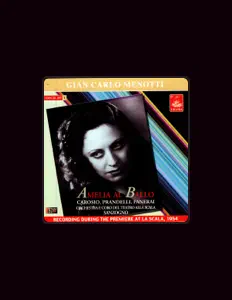
![Ascolta 'Gian Carlo Menotti: Amelia al Ballo [Opera Buffa in One Act] (1954)' di Margherita Carosio, Rolando Panerai, Giacinto Prandelli, La Scala Theater Orchestra, Nino Sanzogno, La Scala Theatre Chorus & Vittori Veneziano](https://is1-ssl.mzstatic.com/image/thumb/Music2/v4/76/7a/e5/767ae548-feb1-6c57-1743-c0339aff5d37/Cover.jpg/1380x1380bb.webp "Ascolta 'Gian Carlo Menotti: Amelia al Ballo [Opera Buffa in One Act] (1954)' di Margherita Carosio, Rolando Panerai, Giacinto Prandelli, La Scala Theater Orchestra, Nino Sanzogno, La Scala Theatre Chorus & Vittori Veneziano")


Chi è Margherita Carosio

Città natale
Genoa, Italy
Nato/a
June 7, 1907
Genere
Classical
Margherita Carosio was one of the major singing stars in Italy before the outbreak of the Second World War. Initially trained by her father, composer and opera coach Natale Carosio, she made her public debut in concert at age 14 and her operatic debut at 16 in the role of Lucia di Lammermoor. Carosio was already an established name by the time she was 19, the year she sang opposite Feodor Chaliapin in Mussorgsky's Boris Godunov at Covent Garden. This was one of Carosio's few appearances outside Italy, however, and although her repertoire was extensive, Carosio was associated most readily with high-lying, coloratura roles: Mimi, Violetta, Musetta, and Konstanze in Mozart's Abduction from the Seraglio to name a few. Among the roles she created for the first time was that of Egloge in Mascagni's opera Nerone at La Scala in 1935. Between 1937 and 1941, Carosio appeared in three Italian opera movies; so impressed was MGM in Hollywood that they offered Carosio a contract, which she declined.
After the war, Carosio was able to perform at Covent Garden again and make what were probably her best recordings for EMI; she had also recorded prolifically earlier for Parlophon and Ultraphon. Ironically, Carosio is best remembered for an engagement that she did not sing; indisposed, she dropped out of a January 1949 production of I Puritani only to be replaced by her understudy, Maria Callas, who went on to captivate the entire opera world in short measure. Unruffled, Carosio sang for another decade, and in 1953 created the title role in Gian Carlo Menotti's Amelia al ballo at La Scala; her recording of the work was one of her last. After her retirement in 1959, Carosio wrote criticism for local newspapers in Genoa. Living into the twenty-first century, Carosio outlived Callas and practically all of her own contemporaries.
Simile a: Margherita Carosio
Scopri musica e artisti simili a Margherita Carosio, come Enrico Campi, Giacinto Prandelli, Rolando Panerai