

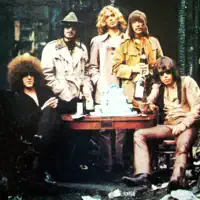
Steppenwolf
Steppenwolf
アルバム · Rock · 1968 · Geffen
The inclusion of “Born To Be Wild” in Dennis Hopper’s 1969 cinematic counterculture classic Easy Rider raised the profile for this struggling West Coast hard rock group, who had a hit single but now had a biker anthem. Their self-titled 1968 debut album features “Wild” along with Hoyt Axton’s anti-drug song, “The Pusher,” as well as a collection of lesser-known blues-influenced tunes that display a seasoned if not yet defined group of hard rock musicians. (Keep in mind, the “heavy metal” playbook — namechecked for the first time in “Wild” — was being written on the fly by these guys among others.) Their guitar-organ attack that could flourish in a live setting had to handle the time limits of vinyl, while leader John Kay had yet to harness his songwriting talents to maximum effect. (“Wild” was written by ex-member “Mars Bonfire”). Kay’s bluesy excursions (“Your Wall’s Too High,” “Desperation”) are made convincing by his trademark husky growl, however, Willie Dixon’s blues standard “Hoochie Coochie Man” is solid if unspectacular. The album’s first two (unsuccessful) singles, Don Covay’s “Sookie, Sookie” and the band original “A Girl I Know” deliver well-schooled R&B and sport the band’s underrated pop sense, respectively.

Steppenwolf
Steppenwolf
The inclusion of “Born To Be Wild” in Dennis Hopper’s 1969 cinematic counterculture classic Easy Rider raised the profile for this struggling West Coast hard rock group, who had a hit single but now had a biker anthem. Their self-titled 1968 debut album features “Wild” along with Hoyt Axton’s anti-drug song, “The Pusher,” as well as a collection of lesser-known blues-influenced tunes that display a seasoned if not yet defined group of hard rock musicians. (Keep in mind, the “heavy metal” playbook — namechecked for the first time in “Wild” — was being written on the fly by these guys among others.) Their guitar-organ attack that could flourish in a live setting had to handle the time limits of vinyl, while leader John Kay had yet to harness his songwriting talents to maximum effect. (“Wild” was written by ex-member “Mars Bonfire”). Kay’s bluesy excursions (“Your Wall’s Too High,” “Desperation”) are made convincing by his trademark husky growl, however, Willie Dixon’s blues standard “Hoochie Coochie Man” is solid if unspectacular. The album’s first two (unsuccessful) singles, Don Covay’s “Sookie, Sookie” and the band original “A Girl I Know” deliver well-schooled R&B and sport the band’s underrated pop sense, respectively.


