Jazz
United States
Freddie Roach
9,516


Freddie Roachについて

One of the more underrated soul-jazz organists of the '60s, Freddie Roach recorded a series of seven albums for Blue Note and Prestige. Where his contemporaries played hard-driving, bluesy, soul-jazz, Roach's approach was more textured and shaded. He was capable of blistering leads, but he was more interested in dynamics, harmonics, and tonal color. As his career progressed, he became more interested in funky grooves, but his knack for tasteful, shaded solos and support never subsided.
Freddie Roach was born in the Bronx borough of New York City on May 11, 1931. His mother was a church organist, and many of his relatives on his maternal side were also musical. Roach grew up in several cities as a child, living with a variety of relatives. At the age of eight, he was living with his aunt in White Plains, NY when he began playing the pipe organ. Over the next few years, he taught himself how to play the organ and piano, eventually studying at the Newark Conservatory for one term. In his late teens, he began playing professionally, joining Grachan Moncur's group the Strollers. At the age of 20, he joined the Marine Corps and stayed for two years, playing in the band. Following his discharge in 1953, Roach returned to jazz, settling in Canada for a short while before returning to the New York area. He soon hit the road, playing piano and organ with Chris Columbus, Cootie Williams and Lou Donaldson.
By the end of the decade, he had decided to concentrate on organ. He settled in Newark, NJ, where he regularly played with his own band and as a solo act. He often jammed at the Club 83 with musicians like Kenny Dorham, Cannonball Adderley, and Jackie McLean. But the key musical association for Roach was tenor saxophonist Ike Quebec, who asked the organist to join his band. Roach played on the sessions that became Quebec's Blue Note albums Heavy Soul and It Might as Well Be Spring. His playing on the two records impressed Blue Note president Alfred Lion, who offered Roach his own contract in 1962. That year, Roach recorded his debut set Down to Earth, supported by guitarist Kenny Burrell, tenor saxophonist Percy France and drummer Clarence Johnston.
Over the next two years, Roach recorded four more albums for Blue Note. In 1963, he made Mo' Greens Please, which also featured Burrell and Johnston, and Good Move, where he was supported by tenor saxophonist Hank Mobley, trumpeter Blue Mitchell and guitarist Eddie Wright. The following year, he cut Brown Sugar with tenor saxophonist Joe Henderson, Wright, and Johnston. In October 1964, he recorded his final Blue Note album, All That's Good, a bizarre variation on his signature soul-jazz that boasted a vocal choir. He left the label the following year, reappearing in 1966 on Prestige. His first album for his new label was The Soul Book, a funkier effort than any of his Blue Note recordings. Two albums, Mocha Motion and My People (Soul People), followed in 1967. None of his Prestige records were particularly successful, and he never recorded again. Over the next three decades, Roach emerged as a cult figure of sorts, appealing to soul-jazz fans who became introduced to the genre through acid jazz. ~ Stephen Thomas Erlewine
Freddie Roachに似た曲やアーティスト
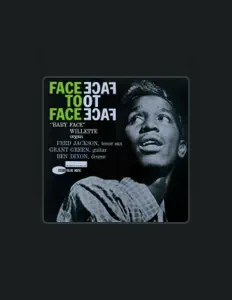
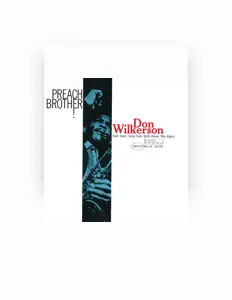
Freddie Roachに似た他の音楽やアーティスト(たとえばBaby Face Willette、 Jimmy Owens & Kenny Barron、 Don Wilkersonなど)をもっと見つけましょう。