Rock
England

80,501,321


Latest Release

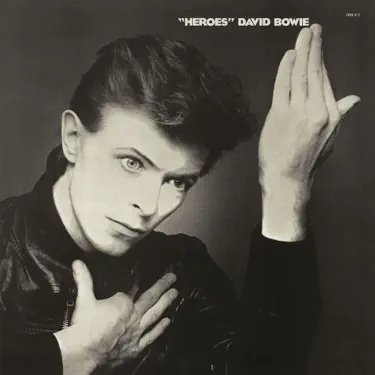



Shazam Global Chart Top 50 AppearancesAll songs and collaborations from David Bowie that have reached the Top 50 of the Shazam Global Chart
OVERVIEW David Bowie peaked at No. 3 on the Shazam Global Chart with "Heroes", spending 12 days in the Top 50.
1Top 50 Entries
12Days in Top 50
SONG
PEAK POSITIONDAYS IN TOP 50TOP 50 DEBUT
The highest position a song reached on the Shazam Global Chart.
The total number of days a song spent in the Top 50 of the Shazam Global Chart. These days may have been non-consecutive.
The date a song first entered the Top 50 of the Shazam Global Chart.

David Bowie
#312Jan 1, 2026
"Heroes" by David Bowie peaked at No. 3 on the Shazam Global Chart, where the song spent a total of 12 day(s) in the Top 50.
Released
1977Total Shazams
3M
Days in Top 50
12The total number of days a song spent in the Top 50 of the Shazam Global Chart. These days may have been non-consecutive.
Top 50 Debut
Jan 1, 2026"Heroes" by David Bowie peaked at No. 3 on the Shazam Global Chart, where the song spent a total of 12 day(s) in the Top 50.
Released
1977Total Shazams
3M
Days in Top 50
12The total number of days a song spent in the Top 50 of the Shazam Global Chart. These days may have been non-consecutive.
Top 50 Debut
Jan 1, 2026David Bowie's Popular Music Videos


![Watch Shadow Man (Unplugged & Somewhat Slightly Electric Mix) [Lyric Video] music video by David Bowie](https://is1-ssl.mzstatic.com/image/thumb/Video126/v4/95/55/05/955505cf-aecf-44ed-b09b-27060e4b0ff1/USJT22100016.sca1.jpg/575x575mv.webp "Watch Shadow Man (Unplugged & Somewhat Slightly Electric Mix) [Lyric Video] music video by David Bowie")


![Watch You've Got A Habit Of Leaving (Radio Edit) [Lyric Video] music video by David Bowie](https://is1-ssl.mzstatic.com/image/thumb/Video125/v4/2b/ab/7e/2bab7ed1-2b1c-3352-4150-6622e404054b/USJT22100014.sca1.jpg/575x575mv.webp "Watch You've Got A Habit Of Leaving (Radio Edit) [Lyric Video] music video by David Bowie")


![Watch Life On Mars? (2016 Mix) [Mick Rock Re-Edit] music video by David Bowie](https://is1-ssl.mzstatic.com/image/thumb/Video62/v4/ac/da/36/acda36bd-edf2-b1d2-d75b-a674a22f4c2d/Warner.1172418291.A10302B00037522630.CROPPED.GB1301600182.sca1.jpg/575x575mv.webp "Watch Life On Mars? (2016 Mix) [Mick Rock Re-Edit] music video by David Bowie")


![Watch I'd Rather Be High (Venetian Mix) [Wasted Edit] music video by David Bowie](https://is1-ssl.mzstatic.com/image/thumb/Video116/v4/c3/93/20/c3932088-ab75-edca-b609-a5370edcc131/USRV31300010.sca1.jpg/575x575mv.webp "Watch I'd Rather Be High (Venetian Mix) [Wasted Edit] music video by David Bowie")


![Watch Love is Lost (Hello Steve Reich Mix by James Murphy for the DFA) [Edit] music video by David Bowie](https://is1-ssl.mzstatic.com/image/thumb/Video116/v4/9a/42/2a/9a422a7c-6135-b4f8-24b8-10b677f78a39/USRV31300009.sca1.jpg/575x575mv.webp "Watch Love is Lost (Hello Steve Reich Mix by James Murphy for the DFA) [Edit] music video by David Bowie")


Artist Playlists




About David Bowie

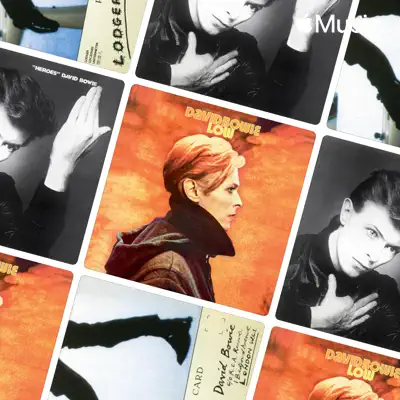
Back at the height of the Ziggy Stardust era, David Bowie told an interviewer that he’d always felt like a vehicle for something else, even if he could never quite figure out what that something else was. For all the times he changed his getup—the glam alien of Ziggy, the moody existentialist of the late ’70s, the pop sophisticate of the ’80s, and so on—he was, in his way, remarkably consistent, a barometer of where the culture was and a glimpse of where it was going. Gender fluidity, the hybridization of rock and electronic music, the transformative power of the internet: Bowie was never there first per se, but he was always there early, a transformative figure who managed to bring challenging ideas into mainstream culture in a way that felt stylish, digestible, exciting, and most of all possible.
Born David Jones in 1947, Bowie was raised in the suburbs of London, converting to the gospel of rock ’n’ roll after hearing Little Richard. He took a minute to find his creative footing (“The Laughing Gnome”—brace yourself), but by his early twenties he’d become a major force in English pop, exploring themes of alienation (“Space Oddity”), identity (“Changes”), and futurism (“Life On Mars?”) while developing a performance style steeped in everything from mime to kabuki and avant-garde theater—a sense of visual identity that would last him the rest of his career.
For three decades, Bowie rarely took more than a year between albums, exploring chilly, electronic art-rock (Low and the so-called Berlin Trilogy), pop (the early MTV hits Let’s Dance and Tonight), the noisy U-turn of the Tin Machine era, and the quasi-industrial sound of such ’90s albums as Outside and Earthling. As prominent and productive as he was, he became more enigmatic as his career went on, a noble stoic at the outer reaches of pop music. His final two albums, 2013’s The Next Day and 2016’s Blackstar (released two days before his death), were among the grandest—and starkest—of his career.
His final video, for the song “No Plan,” was released posthumously on what would have been his 70th birthday. Bowie doesn’t appear in the clip, at least not live. Instead, we see him in freeze-frame on a TV in the window of a rundown electronics store, just for a few seconds near the very end, a little fuzzy: Not a person, but an image fixed on the screen.
Born David Jones in 1947, Bowie was raised in the suburbs of London, converting to the gospel of rock ’n’ roll after hearing Little Richard. He took a minute to find his creative footing (“The Laughing Gnome”—brace yourself), but by his early twenties he’d become a major force in English pop, exploring themes of alienation (“Space Oddity”), identity (“Changes”), and futurism (“Life On Mars?”) while developing a performance style steeped in everything from mime to kabuki and avant-garde theater—a sense of visual identity that would last him the rest of his career.
For three decades, Bowie rarely took more than a year between albums, exploring chilly, electronic art-rock (Low and the so-called Berlin Trilogy), pop (the early MTV hits Let’s Dance and Tonight), the noisy U-turn of the Tin Machine era, and the quasi-industrial sound of such ’90s albums as Outside and Earthling. As prominent and productive as he was, he became more enigmatic as his career went on, a noble stoic at the outer reaches of pop music. His final two albums, 2013’s The Next Day and 2016’s Blackstar (released two days before his death), were among the grandest—and starkest—of his career.
His final video, for the song “No Plan,” was released posthumously on what would have been his 70th birthday. Bowie doesn’t appear in the clip, at least not live. Instead, we see him in freeze-frame on a TV in the window of a rundown electronics store, just for a few seconds near the very end, a little fuzzy: Not a person, but an image fixed on the screen.
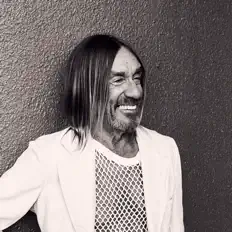
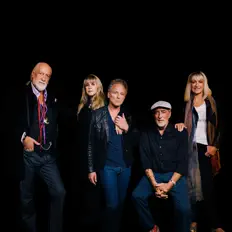
Influenced by David BowieDavid Bowie has influenced the music of Schwarz & Funk, Simple Minds, Modern English and more.





Similar to: David Bowie
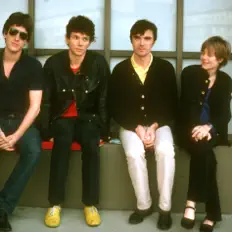
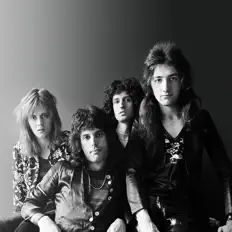
Discover more music and artists similar to David Bowie, like The Rolling Stones, Talking Heads, The Beatles